What Aluminium Shutters Actually Cost In Ballina And Why Timber Doesn't Last Here
If you've searched "shutters Ballina" and started collecting quotes, you've probably noticed the range is wide and nobody wants to give you a straight number. That's not evasiveness. It's because the price of a shutter depends on your windows, not on a national average. But the material you choose matters just as much as the quote, because for shutters in Ballina's salt air, the cheapest option on day one is rarely the cheapest over ten years.
This guide breaks down what actually drives the cost of aluminium shutters, why timber and PVC struggle in this climate, and how to think about the decision in terms of cost-per-year rather than sticker price. Still weighing shutters against another window covering entirely? Our guide to shutters vs blinds compares both side by side.
What Makes Aluminium Shutters Different From Timber and PVC?
Aluminium, timber and PVC shutters all do the same basic job (control light, airflow and privacy) but they behave very differently once they're hanging on a home in this climate for a few years.
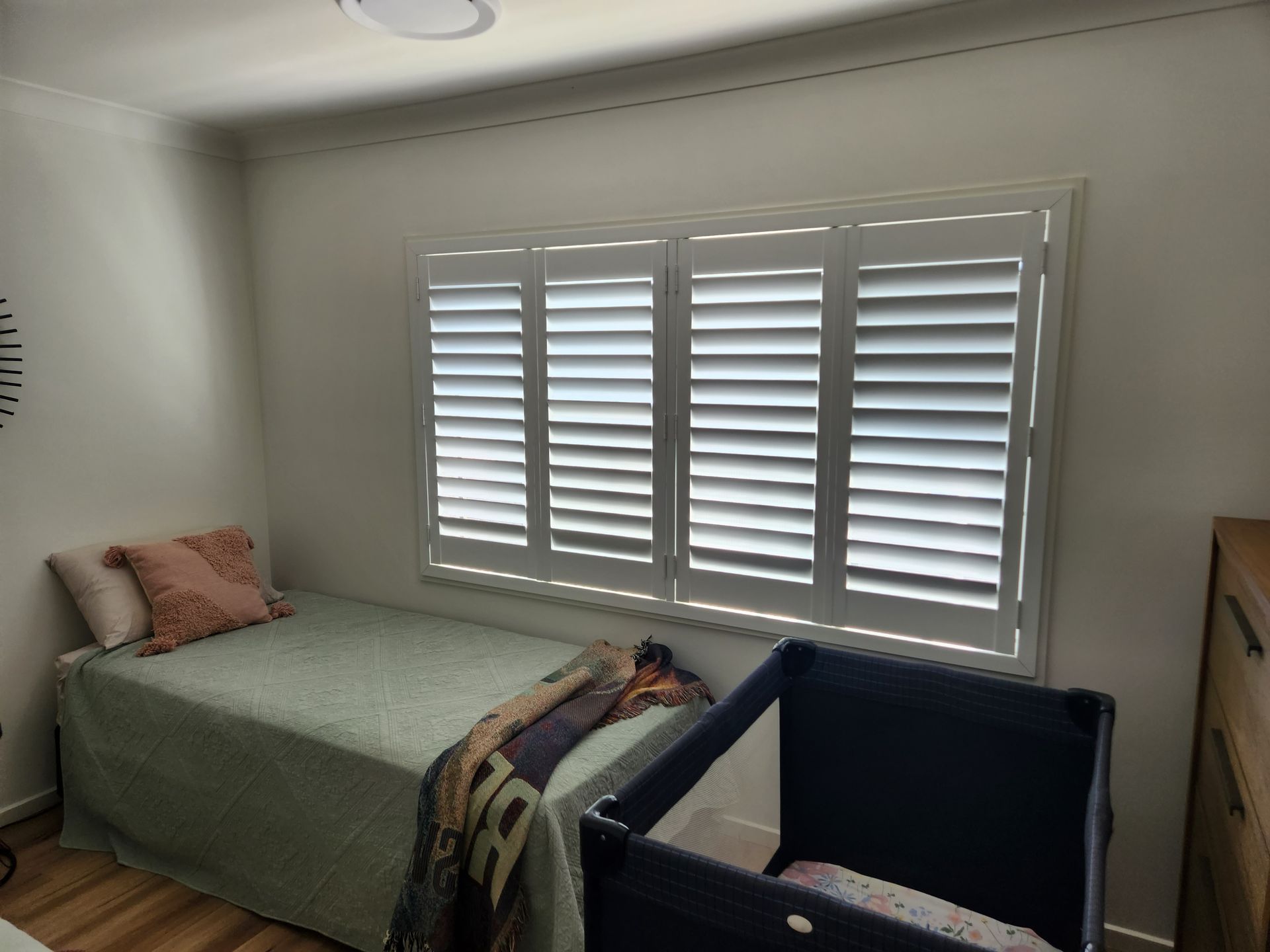
Timber shutters are prized for their warmth and traditional look, but timber is a natural material that moves with moisture. It expands, contracts, and eventually warps or cracks, especially when it's exposed to swings between humid subtropical air and direct sun.
PVC shutters are a budget-friendly alternative and handle moisture better than timber, but most PVC formulations aren't designed for sustained UV exposure. Louvres can sag over time, and lighter colours in particular tend to yellow or chalk on the surface after a few years in strong sun.
Marine-grade aluminium is a different proposition entirely. It doesn't absorb moisture, it doesn't rot, and when it's fitted with corrosion-resistant fittings, stainless steel or similarly rated hardware, it's built to handle exactly the conditions that wear out timber and PVC in coastal towns. For external aluminium shutters, salt-air resistance is what actually drives long-term value, even though the upfront quote is usually higher than timber or PVC.
Why Salt Air and Subtropical Humidity Shorten the Life of Timber Shutters
This part of the coast sits close enough to the water that airborne salt is a genuine factor in how building materials age, not just a talking point. Salt-laden air accelerates corrosion in metal fittings and draws moisture into porous materials like timber, and the region's subtropical humidity means that moisture rarely gets a long dry spell to fully clear.
For a timber shutter, that combination is tough. Even well-sealed timber will take on moisture through hairline cracks in the coating, joints and end grain. Once moisture gets in, the timber swells; when it dries out, it shrinks back slightly differently to how it started. Repeated over wet seasons and dry spells, that cycle is what causes warping, sticking louvres and eventually cracked or delaminating paint and stain finishes.
Standard, non-marine-grade fittings on any shutter type (hinges, tilt rods, screws) are also vulnerable in salt air. Untreated or lower-grade metal fittings can start showing surface corrosion within a year or two in an exposed coastal position, which is often the first sign of trouble before the shutter body itself shows any wear.
What Actually Drives the Cost of Aluminium Shutters?
There's no single "aluminium shutters cost" figure that applies to every home, because the price is built from several independent variables. Understanding these helps you read a quote properly rather than just comparing a bottom-line number between suppliers.
The main factors are:
- Window size and quantity. Larger openings need more panels or wider louvres, and a whole-house job scales differently to a single feature window.
- Internal vs external application. External shutters are engineered to handle direct weather exposure, wind load and UV, which generally makes them more robust, and more expensive, than an equivalent internal shutter.
- Louvre size. Wider louvres often use less material per shutter but need heavier-duty mechanisms to stay rigid, which can shift the price either way depending on the window.
- Fixed vs operable louvres. Shutters with adjustable, tiltable louvres cost more than fixed-louvre versions because of the additional hardware and moving parts.
- Powder-coat colour and finish. Standard colour ranges are typically more cost-effective than custom or premium finishes, and marine-grade powder coating for coastal durability is usually a specified upgrade.
- Access and installation complexity. Second-storey windows, difficult access or existing frames that need modification all add labour time, which shows up in the final quote.
Because these variables interact (a large operable external shutter in a custom colour is a very different job to a small fixed internal panel) the only way to get an accurate number is a measure and quote for your specific windows. Anyone quoting a fixed national price per shutter before seeing your home is estimating, not measuring. See the full shutters range and the finishes available locally.
Are Aluminium Shutters Worth the Higher Upfront Cost?
This is the real question behind "how much should I expect to pay for shutters," and it's worth answering honestly: yes, for most homes in this climate, if you're planning to keep the shutters in place for more than five or six years.
The way to compare materials properly isn't sticker price. It's cost-per-year of service. A timber shutter might cost less to install, but if it needs repainting or refinishing every few years to stay weatherproof, and eventually needs partial or full replacement due to warping, those costs add up across its lifespan. A PVC shutter avoids the repainting cycle but may need earlier full replacement if louvres sag or the finish degrades under UV.
An aluminium shutter with a quality powder-coat finish and corrosion-resistant fittings is designed to hold its colour and keep operating smoothly with minimal intervention for a much longer period. Spread the higher upfront cost across that longer service life, and the annual cost is often comparable to or lower than a timber or PVC shutter once you account for maintenance and earlier replacement.
Example: A homeowner in a beachside coastal pocket replaces timber plantation-style shutters every 6 to 7 years due to warping and coating failure, plus periodic touch-up refinishing in between. A neighbour with marine-grade aluminium external shutters, installed at a higher initial cost, is still on the original set after more than a decade with only routine cleaning. Measured per year, the aluminium option has been the cheaper choice. It just didn't look that way on the day of purchase.
How Long Do Aluminium Shutters Last in a Coastal Climate?
With marine-grade aluminium and corrosion-resistant fittings, external shutters in a coastal environment like this are commonly expected to perform well for well over a decade, and often considerably longer, provided they're installed correctly and given basic periodic cleaning. The powder-coat finish is the main factor in long-term appearance. A quality, correctly cured coating resists chalking and colour fade far better than a budget finish exposed to the same salt air and UV load.
Lifespan does vary with position and exposure. A shutter on an exposed, salt-facing elevation will generally show wear sooner than one on a more sheltered side of the same house, which is worth mentioning to your installer so fittings and finish can be specified accordingly.
Do Aluminium Shutters Need Painting, Staining or Ongoing Maintenance?
No repainting or restaining is needed. Powder-coated aluminium doesn't require the recoating cycle that timber does. The colour is baked into the finish rather than sitting on top of it as a separate paint layer, which is why it holds up so much better to sun and salt exposure.
Ongoing maintenance is minimal: an occasional rinse or wipe-down to clear salt residue and dust, and a check that hinges and any operable mechanisms are moving freely. That's a fraction of the effort timber demands, and it's one of the main reasons the total cost of ownership favours aluminium once you look past the initial invoice.
The Bottom Line
If you're comparing quotes for shutters in Ballina and the aluminium option is coming in higher than timber or PVC, that gap usually reflects a material built to survive salt air and subtropical sun without needing to be repainted or replaced early. The variables that make up your specific quote (window count, size, operable vs fixed louvres, finish and access) are also the reasons no supplier can honestly give you an accurate number without seeing your home.
Want a real number for your windows? Our team can measure and quote based on your actual openings, exposure and finish preferences, so you're comparing a genuine cost-per-year figure rather than a guess.
Frequently Asked Questions
How much do aluminium shutters cost?
There's no fixed price, because cost depends on window size and number, whether the shutters are internal or external, louvre size, fixed vs operable design, colour and finish, and installation access. A measure and quote is the only way to get an accurate figure for your home.
How much are plantation shutters compared to aluminium shutters?
Plantation-style shutters are usually timber or a timber-look composite and are priced differently to marine-grade aluminium. If you're in a coastal position like this, it's worth getting quotes on both so you can compare not just the purchase price but the expected maintenance and replacement costs over time.
Do aluminium shutters rust in coastal areas?
The aluminium body itself won't rust, since aluminium doesn't corrode the way steel or iron does. The main thing to check is that the fittings (hinges, screws, tilt mechanisms) are corrosion-resistant, as standard-grade fittings can degrade in salt air even when the shutter body is fine.
Are external aluminium shutters better than internal ones for coastal homes?
External aluminium shutters are built to handle direct weather exposure, wind and UV, which makes them a stronger long-term choice for coastal-facing windows. Internal shutters can still suit sheltered areas or homes where external fixing isn't practical, but they're not engineered for the same exposure.
How long will aluminium shutters last near the coast?
With marine-grade aluminium and corrosion-resistant fittings, well over a decade of solid performance is common, with some installations lasting considerably longer with only routine cleaning.
Is it cheaper to choose timber shutters upfront and deal with maintenance later?
It can look cheaper upfront, but timber typically needs periodic refinishing and may need earlier replacement due to warping in humid coastal conditions. Once you factor in that ongoing cost, aluminium often works out comparable or cheaper per year of service.