Shutters for Privacy Without Blocking the Breeze: A Ballina Homeowner's Guide
Can shutters in Ballina give you privacy without cutting off the breeze? Yes – the trick is in the louvre angle, not the window covering itself. Adjustable louvre shutters let you tilt the blades to block sightlines from the street or next door while still leaving gaps for coastal air to move through. This matters more in Ballina than most places, because closing a window covering completely to get privacy also means losing the sea breeze that keeps a Northern Rivers home comfortable through summer.
Most generic advice on shutters talks about light control, security or style. It rarely addresses the actual dilemma homeowners on close-set suburban blocks or two-storey coastal builds deal with daily: how do you stop the person walking past, or the neighbour two metres over, from seeing straight into your living room – without shutting off the airflow that makes Ballina's climate liveable?
Why Ballina Homes Face a Unique Privacy-Vs-Ventilation Trade-Off
Ballina's housing stock includes a lot of tightly packed suburban streets and elevated coastal blocks, particularly around the newer estates and beachside pockets. Windows often face directly onto footpaths, driveways or a neighbour's outdoor living area, with very little buffer distance. At the same time, the region's onshore breezes are a genuine asset – cross-ventilation through a home can noticeably cut reliance on air conditioning during the warmer months.
Standard blinds or curtains force a binary choice: open for airflow and visibility, or closed for privacy and stuffiness. Fixed louvre or slatted screens without adjustability run into the same problem in reverse – set once, they either always show too much or always block too much air.
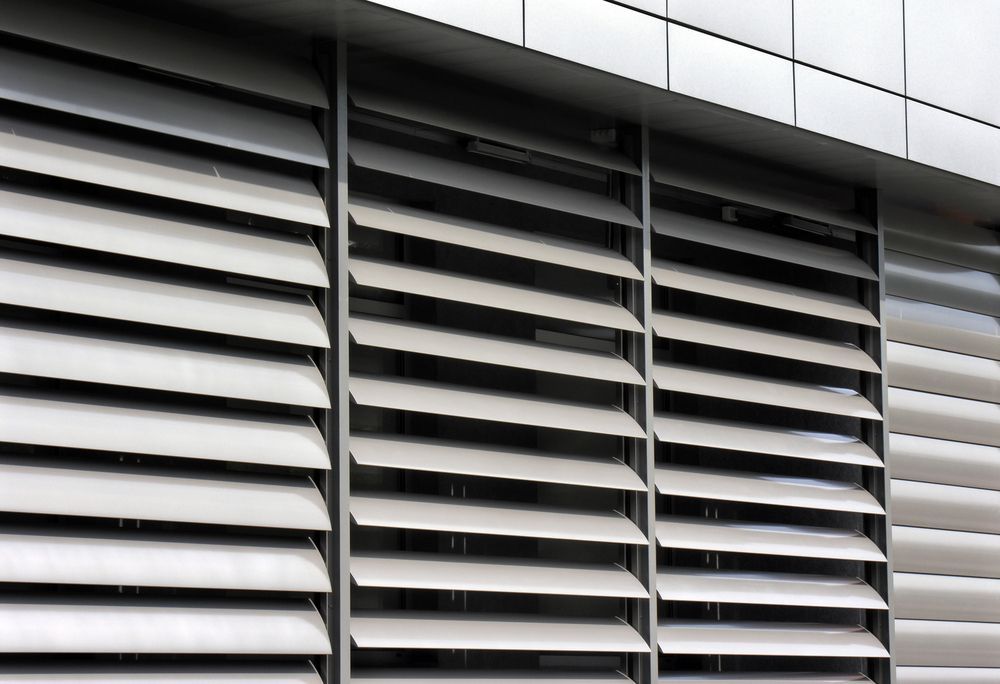
Adjustable aluminium shutters solve this because the blade angle is independent of the open/closed state of the shutter itself. You can have the shutter fully open – panels swung back – with louvres tilted downward or angled away from a sightline, so air still moves freely through the gaps while anyone at eye level outside sees blade edges rather than your living room.
Which Rooms Benefit Most from Adjustable Louvre Shutters?
Not every room in a Ballina home has the same exposure problem, so it's worth being specific about where louvre shutters earn their keep.
Bedrooms, especially those facing the street or a shared side boundary, are the most common request. People want to sleep with a window cracked for the breeze but don't want a clear line of sight in from outside once the lights are on. Angling the louvres upward in the evening lets air in low while blocking the eye-level view from the street.
Street-facing living areas are the second big case. These rooms are used during the day, often with the window open for ventilation, and they're the room passersby can see straight into from the footpath. Louvres angled slightly downward here block a standing adult's line of sight from the street while still allowing airflow across the opening.
Ground-floor windows generally need more privacy attention than upper-storey windows, simply because they sit at eye level with anyone walking or driving past. On two-storey coastal blocks, it's common for the ground floor to need active louvre management while upper-floor windows – which look over fences and rooftops rather than into a neighbour's yard – can stay more open.
An example: a client with a single-storey home on a narrow Ballina block had a main bedroom window roughly three metres from the shared driveway boundary. Keeping the window open for the breeze meant every car heading to the neighbour's carport had a clear view inside. Adjustable louvres angled up and away from the driveway line solved it – airflow stayed, sightline didn't.
How Do You Angle Louvres for Street & Neighbour Privacy?
The general principle is to angle the louvre blades against the direction the unwanted view is coming from, while keeping the gap between blades open enough for air to pass. For a ground-floor window facing a footpath, that usually means tilting louvres so the top edge of each blade angles outward and down – this blocks a standing person's horizontal line of sight while still allowing air to move up and through the gaps.
For upstairs windows looking down onto a neighbouring yard or a shared driveway, the angle often needs to go the other way, since the privacy concern is about someone below looking up rather than someone at the same eye level looking across.
This is where louvre configuration stops being a simple product spec and becomes a bit of a judgment call. The right angle depends on the exact height of the window, the distance to whatever's opposite it and how that distance changes depending on whether you're standing at the window or sitting further back in the room.
What Window Orientations Need the Most Thought in Ballina?
North and east-facing windows in Ballina tend to catch the prevailing coastal breeze most directly, which makes them the windows homeowners are least willing to close off completely – and often the same windows facing the street on a standard suburban block. South and west-facing windows usually carry less of the airflow benefit, so a slightly more closed louvre setting has less of a comfort trade-off attached to it.
Corner blocks and homes on curved streets add another layer, since a window might face two different sightlines – the street and a side neighbour – at once, sometimes needing different treatment at different heights of the same window.
Why Louvre Configuration is Worth Getting Expert Advice On
Off-the-shelf louvre settings are built around an average sightline and an average window height. Ballina's mix of housing types – established weatherboard homes on tight blocks, newer two-storey coastal builds, elevated homes with stilts – means the ‘average’ setting is often wrong for any one specific window.
Getting the angle right means measuring against the actual distance to the street, footpath, or neighbouring window, and factoring in whether the room is typically used standing (kitchen, living area) or seated (bedroom, lounge). This is a conversation worth having with an installer who can assess each window on-site, rather than a decision made purely by product photos or a generic fitting guide. A short on-site assessment before ordering avoids the common outcome of shutters in Ballina that technically work but need constant manual readjustment to actually deliver the privacy they were bought for.
If you're weighing up how to handle a specific window, particularly on a tight block or a two-storey coastal build, it's worth getting a professional assessment rather than guessing at louvre settings from a catalogue. Summerland Screens & Awnings can measure your actual sightlines and airflow needs on-site before you commit to a configuration.
FAQs
Do louvre shutters actually let air through when they're providing privacy?
Yes. The louvre blades can be angled so gaps remain between them even when the angle blocks a direct line of sight, which is different from closing a blind or curtain fully. Airflow and sightline blocking are controlled independently.
Are external or internal shutters better for privacy on a street-facing window?
Both can work, but the right choice depends on the window's exposure to weather as well as sightlines. External aluminium shutters add weather resistance and security on top of privacy control, while internal shutters are usually easier to adjust throughout the day.
Can the same shutter setting work for day and night privacy?
Not always. Daytime privacy is usually about blocking a standing adult's sightline from the street, while night-time privacy is more about blocking a direct view into a lit room. Many homeowners adjust the angle between day and evening use.
Do two-storey homes need different louvre settings upstairs and downstairs?
Generally, yes. Ground-floor windows face eye-level foot and vehicle traffic, while upper-storey windows are more likely to face down into a yard or across rooftops, which changes the angle needed to block the relevant sightline.
Is it worth getting a professional measure and assessment before choosing shutters?
For privacy-focused installations, yes. The right louvre angle depends on exact window height and the distance to whatever's opposite it, which varies from property to property and even window to window on the same house.
Can shutters be adjusted after installation if the privacy issue changes?
Adjustable louvre shutters remain adjustable for the life of the product – the blade angle can be changed at any time, which is one of the main advantages over fixed screens or permanently angled louvres.